
Why Mushrooms, Part 4: The Debt We Owe to María Sabina
Just one of many explorations of how a business of abundance and regeneration might be built on a system of extraction and appropriation.

Naturally occurring psychedelic medicines have been employed by humans around the world for thousands of years. The very earliest use that is supported by the known archeological record is about 10,000 years ago, and if you didn't already read my take on how that went, I'd encourage you to go read Why Mushrooms, Part 3: The Awakened Ape Hypothesis.
The diversity of substance and use of psychedelics by indigenous folks is too wide for me to address here, but since this is part of the series explaining why Buffalo Collective endorses psilocybin specifically, I'm going to focus on that story. Psilocybin mushrooms are indigenous to North America—they're from the place where we are, which matters when we're trying to build relationships based on abundance and reciprocity rather than extraction.
Of course, we don't know how long psilocybin has been in use on the North American continent, but we do know it predates the arrival of the Spanish colonizers four hundred years ago, who called it "flesh of the gods." They recorded its use by several mesoamerican people groups including Maya, Aztec, Olmec, and more. Psilocybin was a sacred plant, employed in ritual for a variety of purposes, including physical and emotional healing, divination and prophesy, community connection and recreation.
Notably, these rituals were led by individuals with a specific outlook, training, and experience, often curanderas (healers) or sabias (wise women). And so it was, for thousands of years, until an amateur ethnomycologist and Vice President at JP Morgan Chase learned about the mushroom ritual practiced by the Mazatec people in Mexico's Oaxaca region. In 1955, R. Gordon Wasson traveled to a town called Huautla de Jiménez and met with a sabia there named María Sabina. Sabina was a poet, musician, and ritual leader.
In order to gain access to the velada, the sacred ceremony, Wasson lied to María Sabina, claiming that he did not know the whereabouts of his son and asking to use the medicine to locate him and bring him to safety. Within a couple of days, he was joined in ceremony by his wife and son, and then they left, taking mushroom spores and their experiences with them. The spores made it to Paris where they were studied and the psilocybin molecule isolated by Albert Hoffman, the Swiss chemist who was the first to synthesize and experience LSD.
Although his 1957 article in Life magazine did not name María Sabina or the town where she lived, Wasson did go against her wishes when he provided those details in his book, Russia, Mushrooms, and History. This violation would be the catalyst for a chain of events that would wreak havoc on the town of Huautla de Jiménez, María Sabina, and her family.
Anxious to experience the "magic" mushrooms, hippies, students, artists, and scientists from the United States began traveling to central Mexico in search of María Sabina and her ritual service. As the town was inundated with these tourists, they brought unwanted attention that dramatically changed the small indigenous community and turned its inhabitants against her. Sabina was arrested and jailed for being a drug dealer, ostracized from her role as a leader, her house was burned down, and her son was murdered.
From 1967 to 1977 the Mexican Army established a blockade around the town of Huautla de Jiménez in order to stem the invasion and return things to normal, but María Sabina was not restored to her community and she died impoverished and malnourished in 1985.
And now here we are, 2026 and psilocybin has been illegal in the United States for decades, yet somehow legal in certain areas for years, and I am part of the problem. Venture capitalists and big pharma are pouring millions into psychedelic startups. Retreat centers are opening across the country. And here I am building a business in this ecosystem with the original sin of extraction and appropriation.
I don't claim to have María Sabina's knowledge. Buffalo Collective isn't about the medicines; it's about integration, community, accountability. But here's what I can't escape: the only reason my business model makes sense is because the psychedelic renaissance exists. And the psychedelic renaissance exists because people like Gordon Wasson took knowledge from people like María Sabina without permission, without reciprocity, and without regard for the consequences.
Maybe you remember when I told you about my mushroom journey at that Phish show—how three hours with the medicine taught me more than a dozen years of therapy? The psilocybin I took, the cultural permission to use it for fun, my ignorance that mushrooms could heal—all of it traces back through a line of extraction that destroyed María Sabina’s life.
I can't un-know what the mushrooms showed me, I can't give back the healing I've received, and I can't build Buffalo Collective without acknowledging that I'm walking a path paved by people like María Sabina who paid prices I'll never pay.
My gratitude isn’t enough, but I hope it’s not meaningless. My education is limited, but certainly not complete. My impact and how I pursue it, however, is where I’d like to be judged.
So here’s my thinking on how I can begin to settle this debt, on behalf of myself, Buffalo Collective, and all of our current and future members.
- As a business, Buffalo Collective will never seek patents, intellectual property rights, or any other method of controlling knowledge related to the medicines or the practice of integration. We do not own this knowledge, and we will never try to.
- Buffalo Collective will set aside 5% of annual revenue to support Indigenous-led organizations working to preserve traditional plant medicine practices and support Indigenous communities impacted by psychedelic tourism and commercialization, prioritizing North America. We will seek guidance from Indigenous advisors on where these funds should go.
- All Buffalo Collective members and retreat participants will learn Maria Sabina’s story and our culture will teach and model the respect and reverence that she and the medicines deserve.
- As Lead Navigator, I will ensure that all co-founders, investors, and advisors are not just aware of the history, but are actively engaged with me in learning from and collaborating with Indigenous advisors as we pursue business growth strategies.
These commitments aren't reparations—nothing I do can repair what was taken from María Sabina or the countless other knowledge keepers whose wisdom was extracted without consent. And they're not a formula that makes Buffalo Collective "the ethical option." They're a starting point for building different relationships with these medicines and the people who protected them.
What I can do is continue to challenge myself to break my cultural conditioning and center reciprocity instead of extraction, acknowledgement instead of ignorance, and collaboration instead of individualism.
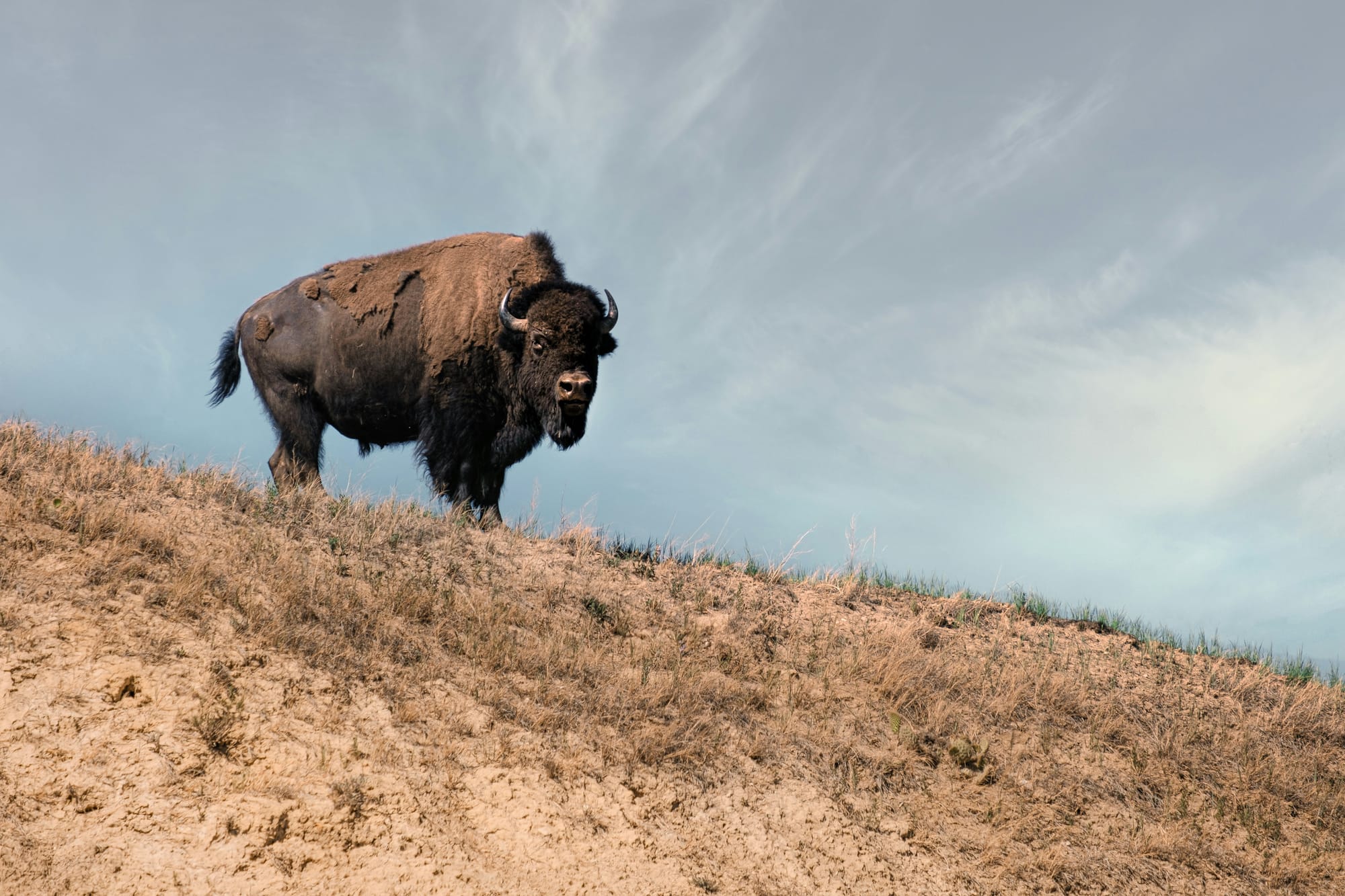
The debt we owe María Sabina isn't payable. But perhaps what we owe is to carry the weight of that debt—to let it change how we relate to these medicines, to each other, and to the communities who've protected this knowledge at such devastating cost. Like buffalo, we won’t shy away from the storm, but we will need each other to get through it safely.